DIG INTO | FACTS | CRIME | NEWS | ENTERTAINMENT | WE GIVE YOU THE VERY BEST GIST
Get link
Facebook
X
Pinterest
Email
Other Apps
-
I earn £50 as a naked cleaner - my partner is okay with it but some of my clients have creepy requests A woman who works as a naked cleaner has revealed the weirdest parts of the job - including clients who are also naked. Lottie Rae, 32, took up the unusual role to make some extra money in 2017, and charges £50 an hour - estimating she's made a few thousand pounds over the years. The British cleaner says in the six years she's been working as a naked cleaner she's had a range of clients - including some who just want company, naturists, and others who 'hope for something more'. The cleaner, who describes herself as 'free-spirited' says the role has made her feel more body confident and even says it's empowering. Lottie said: 'There's a fair few people who are creepy - a handful of the guys I clean for book cleaners on the premise they will get something else. The cleaner, who describes herself as 'free-spirited' says the role has made he...
Get link
Facebook
X
Pinterest
Email
Other Apps
Followers
The Strange Story of the Man Who Chose Execution By Firing Squad
But when Utah executed a Death Row inmate by firing squad four decades ago, citizens felt very differently about it. In 1976, when Gary Mark Gilmore was sentenced to death by firing squad, TIME reported that dozens of men were calling the Utah state prison warden asking to be one of the shooters. Gilmore, then 35, was a long-time resident of criminal-justice institutions, starting with a reformatory at age 14; in 1975, he killed a gas-station attendant and a motel clerk, apparently without motive. And, when his lawyers appealed, he tried to force them not to. His execution was to be the nation’s first after the Supreme Court lifted a decade-long moratorium on the death penalty.
His argument? To be executed would be to “die with dignity,” he said. And he took advantage of Utah’s law allowing a prisoner to choose his method of execution from either hanging or firing squad to elect for the latter. In its Nov. 22 1976 issue, TIME described how it would go ahead:
If Gilmore is shot, five volunteer marksmen will do the job. They will probably be law-enforcement officials, though none will be from the staff of the prison 20 miles from Salt Lake City where the death sentence will be carried out. Gilmore, hooded and strapped by the neck, arms and legs to a wooden chair, will have a circular piece of black cloth pinned over his heart. Resting high-powered .30-cal. Winchester hunting rifles on a two-by-four railing, the squad will simultaneously fire one round from 20 ft. away. There is no provision for a second volley or a coup de grace, and one rifle will be loaded with a blank so that no one will know for sure that he was responsible for the condemned man’s death.
On the other hand, according to the new lawyer he chose, Gilmore believed that life in prison was cruel and unusual. So much so, that when his execution was stayed, his girlfriend smuggled Seconal sleeping pills to him during a visit, and they both took overdoses. He was rushed to a hospital and ended up back in prison, and progress on his case was delayed while he recovered. She fell into a coma.
In December, following a hunger strike by Gilmore, a hearing board decided that his wish to die by firing squad could move forward. Asked by a judge whether he had anything to say, his only request was not to be hooded during the execution.
Still, even though the date was set, the execution did not happen as planned, as TIME reported on Dec. 13 the same year:
Though Gilmore has persistently disavowed all lawyers who tried to win him a reprieve, the decisive intervention came when Stanford Law Professor Anthony G. Amsterdam moved in the following day, on behalf of Gilmore’s mother. Amsterdam, a leader in the fight against capital punishment for a decade, filed a petition with Supreme Court Justice Byron White, who is responsible for emergency appeals in the Utah area. “The need for a stay of execution is obvious,” said Amsterdam. “Such stays are commonly granted in death cases. Indeed, the only factor that makes this application unusual is [Gilmore’s] assertion that he wished to be executed.”
Among Amsterdam’s reasons for appealing: that there may have been judicial errors in the original trial, that Gilmore may have waived his constitutional rights without fully understanding them, that his defense lawyers were inadequate, and that Utah’s capital punishment law may be unconstitutional. Justice White duly turned the petition over to the full court. The next day the court voted 6 to 3 to stay the execution for one day so that Utah state authorities can provide more information. That demand is very likely to require several further delays.
Meanwhile, Gilmore and his family again got rid of his lawyer, and sold the rights to his story in a deal that resulted in a 1982 movie, The Executioner’s Song, in which Tommy Lee Jones played Gilmore. The entrepreneur who bought the rights was invited to witness Gilmore’s execution.
That event finally took place in January of 1977. “It was an old mahogany office chair with a black vinyl seat and back,” TIME reported on Jan. 31. “There, in an old tannery known as the Slaughterhouse in the southwest corner of the Utah State Prison, sat Gary Mark Gilmore, 36, freshly shaven and wearing a black T shirt, crumpled white trousers and red, white and blue sneakers. His neck, waist, wrists and feet were loosely bound to the chair. Twenty-six feet away hung a sailcloth partition with five slits. Hidden behind the curtain stood five riflemen armed with .30-.30 deer rifles, four loaded with steel-jacketed shells, the fifth with a blank.”
Gilmore was administered his last rites. A target was pinned over his heart; he was hooded, despite his earlier request. All four of the loaded bullets hit their target. Gary Gilmore became the first prisoner to be executed in the U.S. in a decade.
Gilmore’s desire to die, as well as the timing of his execution, made his story irresistible to many Americans, especially at a time where public approval of capital punishment ran high. But those factors that made his case intriguing were the same ones that still limit what can be learned from his case. After all, a precedent that relies on an inmate who advocated for his own execution is one with few applications. “Gilmore would not allow the legal points to be made,” law professor Charles L. Black Jr. explained at the time. “Gilmore cannot give away other people’s rights.”
Welcome to Summitgist.blogspot.com This is a blog site that focused on all that’s interesting and matters and history event. As a visitor, you are free to participate by sharing, comment, and asking of questions and don't forget minding our policy in regards to whatever things you choose to do. You can also subscribe to our Leak sex video channel A place where you can watch real lives leak sex video that has surface online. Don't be left out. Thank you.
Man beat and stripped cheating wife fully naked – As neighbours stood to watch (See Photos) Man beat and stripped cheating wife – Just saw a gruesome video online that broke my heart. Men… and even women stood and watched as this man stripped his wife to her underwear and brutally beat her with a plank. The people who posted the video online said he beat her to death, but that isn’t shown in the video. The last seconds of the video shows the man dragging the very weak woman away. They said the man attacked his wife after catching her with another man. And no, it didn’t happen in Nigeria. I screen-grabbed from the video. TO WATCH THE VIDEO AND TO SEE MORE PHOTOS OF THIS ARTICLE CLICK HERE .
When Dennis Rader murdered a family of four in cold blood, he made the children watch as he strangled their parents. Then, he took the 11-year-old girl to the basement where he removed her underwear and hung her from a sewer pipe. He told the girl, "Well, honey, you’re going to be in heaven tonight with the rest of your family." Read the shocking story of the BTK killer here: For 30 years, Boy Scout troop leader and church council president Dennis Rader was secretly the BTK murderer — while looking like the perfect family man to his neighbors in Kansas. Dennis Rader was the president of his church congregation as well as a loving husband and a doting father. Altogether, he seemed to be a reliable and responsible man to all who knew him. But he was leading a double life. She had no idea that for 30 years her father preyed on girls just like her. This is the brutal story of the BTK Killer. Dennis Lynn Rader was born on March 9, 1945, as the oldest of four in Pittsburgh, Kansas....
FEBRUARY 04, 2023, On Rampur Streets, Naked Woman Spotted Ringing Doorbells at Midnight ; UP Cops Solve Mystery A naked woman was reportedly caught on CCTV roaming around the streets of Milak village in Rampur. She was allegedly ringing the doorbells of residents and disappearing in the middle of the night. Imagine a random woman ringing your house doorbell in the middle of the night and disappearing. Now imagine this happening to multiple residents in your neighborhood – this was the nightmare haunting residents of Rampur in Uttar Pradesh, before the cops solved the mystery. A naked woman was reportedly caught on CCTV roaming around the streets of Milak village in Rampur. She was allegedly ringing the doorbells of residents and disappearing in the middle of the night. Videos of the incident were widely shared on social media, prompting a response from Rampur police... read and watch video According to cops, the incident came to their attention after a resident filed ...
12 Jaw-Droppingly Evil Torture Devices Used Throughout History 1 OF 26 CRIME & PUNISHMENT NEXT LIST WARNING: DISTURBING DESCRIPTIONS BELOW Humans are incredibly creative when it comes to torture and humiliation, as surviving artifacts of ancient cruelty attest. One of the most illustrious and creative civilizations of all time, the Greeks, produced one of the most famous ancient torture devices, the brazen bull . The Egyptians were similarly adept at brutal ancient torture, and the Romans used pain during interrogation in extremely effective ways. During medieval times, a wide range of people, from common criminals to the mentally ill, from those accused of witchcraft to political adversaries, were tortured to death, in many cases unfairly. The bloody, shameful legacy of that dark period is revealed in the following list of surviving artifacts of cruelty displayed in various museums aro...
In Her Own Words, DU Girl Recounts Horror of a Camera Staring at Her in Her Own Bathroom '9.30pm, a 'safe' residential area Hudson Lane, Delhi, the place I have been staying for last two years became a place that will haunt me for a long time. I was taking a bath in my pg when I saw a camera lens pointed towards me through the washroom exhaust. The window has a mesh, which claimed by the landlady to be completely opaque. Behind the bathroom is a dingy shady lane.The moment I tried to look closer, the person pulled the camera back and it immediately disappeared. I called out to my roommate, and told her what had happened and asked her to check, but by that time it occurred to me that he must have already fled. We called up the landlady and the cops. Police reached within minutes and investigated the area, but there was no trace of the culprit. I don't know whether I should feel lucky that I caught the camera lens or should I feel scared to the core that this has been go...
At 6’5, 450 lbs, Big Van Vader got his first national exposure in the American Wrestling Association (AWA). He went by the moniker Baby Bull, which was later changed to Bull Power. White honed his skills during this time, and his ring work improved significantly to the point that he was booked in a match with Stan Hansen for the AWA World Heavyweight Championship, where he was defeated. Although originally signed to All Japan Pro Wrestling (AJPW), AJPW owner Giant Baba traded White’s contract over to New Japan Pro-Wrestling (NJPW) in 1987 after consideration. Upon joining NJPW, White was given the ring name Big Van Vader and began to wear a black wrestling mask. His new identity was based on a strong warrior of the same name from Japanese folklore. He was introduced as the crown jewel of the Takeshi Puroresu Gundan stable which was managed by Takeshi Kitano. Vader challenged Antonio Inoki, who had already defeated Riki Choshu, and defeated the worn-down Inoki. The pro-Inoki audience ri...
B-24L-1-CO, Liberator, Serial Number: 44-41421, assigned to 371st BS, 307th BG, 13th AF, USAAF. On November 8, 1944 took off from Kornasoren Airfield on Noemfoor Island piloted by 1st Lt. Walter A. Scalese on a bombing mission against Alicante Airfield on Negros. Over the target, the bombers were intercepted by enemy aircraft and hit by cannon in the right wing causing the outer wing to bend upward and one of the tail stabilizer to fall off. A photograph of the damaged bomber before it fell out of control and crashed on the northern tip of Negros killing the entire crew on impact. The crash was observed by Sgt Marvin M. Kottke aboard another bomber. When this bomber failed to return it was officially declared Missing In Action (MIA).(MACR: 10456) The Associated Press (AP) released a photograph of the damaged bomber on December 11, 1944 with the caption: "OVER THE PHILIPPINES - This picture wa...
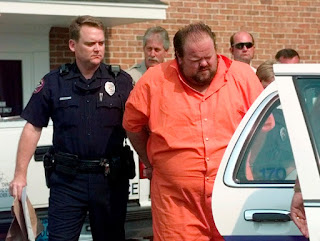
Alabama is preparing to use a new method of execution on death row inmate later this month Nitrogen hypoxia, which is supposed to cause death by replacing oxygen with nitrogen, has been authorized by Alabama and two other states for executions but never used. MONTGOMERY, Ala. — Alabama could be ready to use a new, untried execution method called nitrogen hypoxia to carry out a death sentence later this month, a state attorney told a federal judge Monday. James Houts, a deputy state attorney general, told U.S. District Judge R. Austin Huffaker Jr. that it is “very likely” the method will be available for the execution of Alan Eugene Miller, currently set for Sept. 22 by lethal injection. The final decision on whether to use the new method is up to Corrections Commissioner John Hamm, he said, and litigation is likely. Nitrogen hypoxia, which is supposed to cause death by replacing oxygen with nitrogen, has been authorized by Alabama and two other states for executions but never used. Con...




Comments
Post a Comment